

What a Greek Taverna Table Teaches Us About Hospitality
A researched cultural guide to the Greek taverna table: why shared plates, olive oil, oregano, conversation, and philoxenia matter, plus practical ways to bring that Mediterranean table ritual into your home with CaptainGreek pan…
What a Greek Taverna Table Teaches Us About Hospitality
A taverna table is more than a place to eat. It is where food is shared, time slows down, and simple Mediterranean ingredients become part of a larger ritual of welcome.
A taverna table is not valuable because it looks picturesque. It matters because of what happens around it: food is shared, time stretches, guests become part of the room, and a simple meal turns into a small act of hospitality. For CaptainGreek, that is the cultural story worth keeping.
The table is not just a scene from a Greek island postcard. It is one of the clearest ways Mediterranean life teaches us to eat with others instead of simply eating next to them.
The best Mediterranean tables are not overdesigned. They are generous, useful, and easy to join.
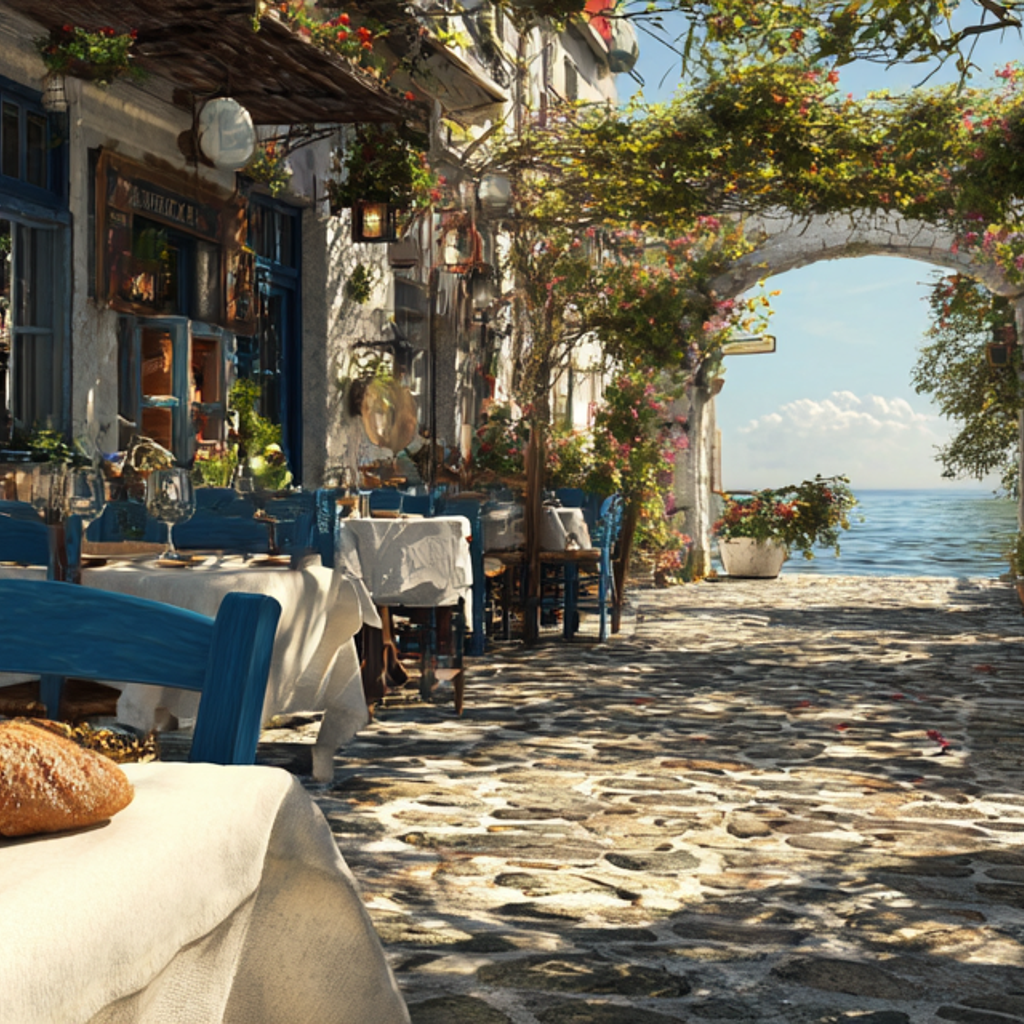
That is the spirit behind a good taverna table: bread within reach, olive oil close by, shared plates in the center, and enough room for stories to unfold.
What a taverna table really represents
In Greece, the taverna has long been more than a place to order dinner. It is a neighborhood meeting point, a family gathering place, a stop after work, a Sunday habit, and sometimes the unofficial town square. The best taverna tables are not perfect. They are practical: a cloth or paper cover, bread within reach, olive oil close by, a few shared plates in the center, and enough room for elbows, glasses, stories, and debate.
That is the part worth bringing home. A taverna-inspired table does not need a restaurant menu or a staged vacation setting. It needs generosity, shared food, and a slower rhythm. The meal begins when people sit down, but the point is not to hurry toward a final course. The point is to let the table do its work.
Table note
For CaptainGreek, this is the right kind of cultural story: not nostalgia for its own sake, but a practical way to help customers understand how Mediterranean ingredients become part of everyday life.
The role of meze: small plates, big conversation
Meze is often translated as small plates, but that translation misses the spirit. Meze is less about portion size and more about pace. A bowl of olives, a dish of feta, grilled bread, dips, herbs, vegetables, seafood, or small bites of meat can all sit together in the middle of the table. No one owns the plate. Everyone reaches, offers, tastes, and passes.
That shared format changes the meal. Instead of each person disappearing into a separate entrée, the table stays active. Someone asks for more bread. Someone adds a little olive oil. Someone remembers a story. The food gives people a reason to keep returning to the center.
A simple CaptainGreek table starter
- Good bread for dipping, passing, and keeping the table relaxed.
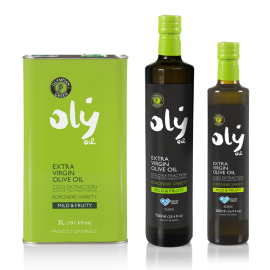
- Greek olive oil for bread, salads, vegetables, and finishing.
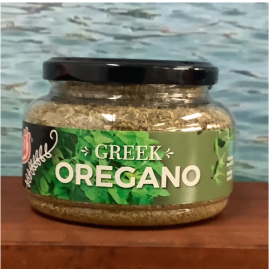
- Greek oregano for tomatoes, feta, warm bread, potatoes, grilled meats, and vegetables.
- Olives and cheese to add salt, richness, and texture.
- One warm dish so the table feels cared for without becoming complicated.
Philoxenia: hospitality without performance
A taverna table also carries the Greek idea of philoxenia, often understood as hospitality or welcome. In everyday terms, it means making space for someone. It is not about overproducing the evening. It is about offering what you have with warmth and confidence.
That is why the most memorable Mediterranean tables are often simple. The host does not need to explain every dish or apologize for what is missing. A few strong ingredients, served with intention, can say enough. Olive oil on the table says, “start here.” Oregano over warm bread, salad, roasted vegetables, or grilled meat says, “this belongs together.” A small plate passed from hand to hand says, “you are part of this meal.”
Everyday version
Bread, olive oil, herbs, olives, cheese, sliced tomatoes, and one easy warm dish. This is enough for a weeknight table that still feels intentional.
Hosting version
Add two or three shared plates, serve in waves, and keep the center of the table active. The goal is not perfection. The goal is welcome.
How to build a taverna-inspired table at home
Use this as a practical table plan, not a strict recipe.
- Start with the center. Put bread, olive oil, herbs, and one or two small plates where everyone can reach them.
- Add contrast. Pair something fresh with something rich: tomatoes with feta, cucumbers with olives, grilled bread with olive oil, or roasted vegetables with oregano.
- Serve in waves. Bring food out gradually instead of placing everything down at once. The meal feels more relaxed when plates arrive as the conversation grows.
- Keep the table useful. Avoid overdecorating. Leave room for plates, glasses, serving spoons, and people’s hands.
- Let the meal linger. A taverna table is not built for rushing. Coffee, tea, fruit, or one more small plate can extend the ritual naturally.
What to avoid
- Do not turn meze into a checklist. Three good shared plates are better than ten rushed ones.
- Do not make the table too formal. Mediterranean hospitality feels generous, not stiff.
- Do not hide the pantry staples. Olive oil, oregano, bread, and simple seasonings belong on the table because people use them throughout the meal.
- Do not force the theme. A taverna-inspired table should feel lived-in. It should not feel like a costume.
Best for: the meals people remember
This kind of table works especially well for casual hosting, summer dinners, Sunday lunches, family birthdays, backyard meals, and nights when you want guests to relax instead of wait for a formal course.
It is also a smart way to introduce customers to Mediterranean products because the use case is clear: these are not pantry items that sit in a cabinet. They are ingredients that help make the table feel alive.
Pantry pairing
Use Greek olive oil for bread, salads, vegetables, beans, grilled fish, and finishing. Use Greek oregano when you want a stronger herbal note on tomatoes, potatoes, chicken, lamb, feta, or warm bread.
Together, they create the simplest bridge between product and culture: open the bottle, crush the herb between your fingers, and the table starts to feel intentional.
Bring the taverna table home
Begin with the staples that appear again and again on Mediterranean tables: olive oil for dipping and finishing, herbs for aroma, and simple pantry ingredients that make shared plates easier to build.
The Captain’s Table is built around that idea: food culture should be useful. A taverna table is not something to admire from far away. It is something you can recreate in small, honest ways with the right ingredients, a few shared plates, and enough time for people to stay.
FAQ
What is a Greek taverna?
A taverna is a casual Greek dining place known for familiar food, shared plates, conversation, and hospitality. It can be simple or lively, traditional or modern, but the table is usually the heart of the experience.
Is meze the same as appetizers?
Not exactly. Meze can begin a meal, but it can also become the meal itself. The important part is sharing: small plates are placed in the center so people can taste, pass, and keep the conversation moving.
How do I make a taverna-style table without cooking all day?
Choose a few strong basics: bread, olive oil, oregano, olives, cheese, fresh vegetables, and one warm dish. The table will feel more authentic if it is relaxed and useful rather than overloaded.
Which CaptainGreek products fit this kind of table?
Start with Greek olive oil and Greek oregano. They are practical, easy to use, and naturally connected to the way Mediterranean tables are served: simple food, shared plates, and flavor added at the table.
Can this work for everyday meals?
Yes. A taverna-inspired table does not have to be a party. Even a weekday dinner can borrow the idea: put one or two shared plates in the center, add bread and olive oil, and let the meal feel less rushed.
Set the table, then let it do its work
A good Mediterranean table does not need to be complicated. Start with shared plates, honest ingredients, and a little more time than usual.
Explore more from The Captain’s TableBring this Mediterranean table home
Selected products from this guide, chosen to turn inspiration into a real pantry, ritual, or table moment.